
Why the Good Olive Oil Goes in Our Conditioner
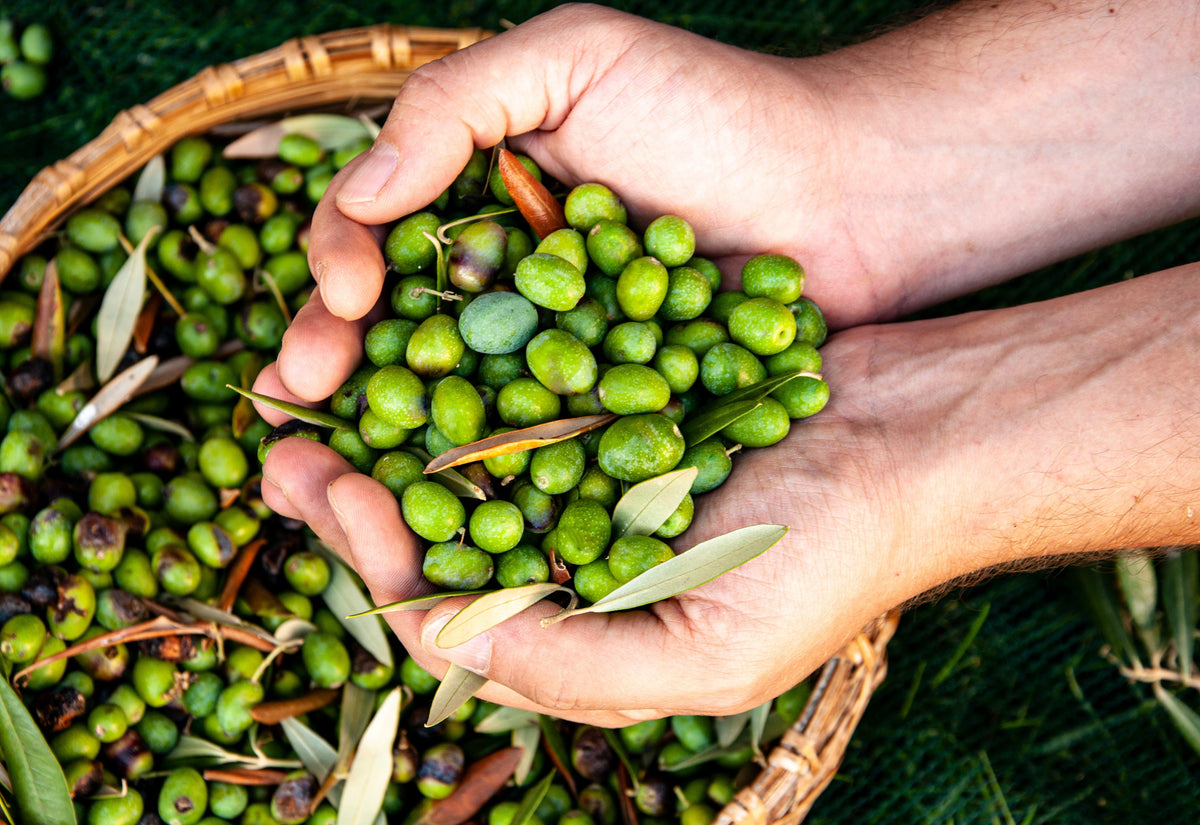
The olive oil we’re putting into BOXBOX is the kind you bring to a dinner party. Extra virgin, from a single Portuguese farm, made by someone who has spent years learning how to get the best out of those particular trees. The sort of oil you put on the table with good bread when friend are over.
We’re putting it in a conditioner.
My brother Chris turned his kitchen into a personal care laboratory while we were building BOXBOX. Even by that standard, this takes a little explaining. And the explanation starts with my friend and co-founder, Nader Akhnoukh.
Nader spent two decades building technology companies before moving his family from Colorado to Portugal. His family had found a life they loved there, but much of his working life was still back in the US. He wanted to build something that connected him to the place he now called home.
Olive oil was everywhere. As he began visiting farms, he found producers whose knowledge of their land had been built over generations. He considered buying a farm himself, then recognized how much he had to learn from the people already doing this well. He trained as an olive oil sommelier, worked on his Portuguese, and spent time getting to know them.
Nader and I were friends and colleagues long before we started talking about olive oil. Wildly Virgin grew out of those conversations. For transparency, Chris and I are partners in Wildly Virgin and have an ownership stake in the business. Working alongside Nader has given me a close view of the care that separates an ordinary oil from an exceptional one.
What Nader found changed the way we thought about something we had used all our lives.
Olive oil looks like a simple purchase until you start asking questions. “Extra virgin” is a specific grade, with chemical and sensory standards behind it. A bottle labeled simply “olive oil” can contain refined oil blended with virgin oil. Those are different products, even if the bottles look equally at home on a kitchen counter.
Then there is the industry’s documented problem with adulteration and mislabeling. In one investigation announced in 2023, Spanish and Italian authorities seized more than 260,000 liters of oil unfit for consumption being marketed as extra virgin. That does not tell you what is in the bottle at your local shop. It does explain why we want more than an attractive label between us and the source.
Wildly Virgin’s approach gives each oil an identity you can follow: one producer, one farm, one harvest. Nader knows the people making it. The harvest and the producer are part of the story, and the oil is tested. When we say single-farm sourcing, we mean being able to get past a country of origin and find the person responsible for what is in the bottle.
Take Virgulino Neves, who makes Wildly Virgin’s Forte in the Alentejo. He has spent nearly two decades growing olives on land others considered too rocky to farm, and mills them on the property within hours of harvest. Or Joaquim Moreira, whose Reserve came from a grove of centuries-old Cobrançosa trees. Nader tasted successive batches through the harvest before choosing the one to bottle.
That is the level of attention we are talking about, down to choosing a particular batch from a particular grove. Wildly Virgin’s oils have gone on to win gold medals at the NYIOOC World Olive Oil Competition. By then, the grower has made hundreds of decisions that most of us will never see.
By the time we began developing BOXBOX, we knew too much about olive oil to treat it as an interchangeable line on a supplier’s list.
We chose early-harvest extra virgin oil from the same pursuit of quality that built Wildly Virgin, with olives milled within hours and each harvest tested. We pay attention to its naturally occurring polyphenols as well as its origin. This is exceptional culinary oil, going into products most people will encounter half-asleep in the shower.
There is something a little unreasonable about that. I’m comfortable with it.
As Chris wrote in Every Ingredient Earns its Place, olive oil has a straightforward job in our formulas: it is an emollient, helping soften skin and condition hair. Its polyphenols interest us, but the evidence for their effects on skin is still developing. A gold medal for an oil does not establish what a finished moisturizer will do. We still have to get the whole formula right.
For me, this is one of the clearest examples of what we mean by quality at BOXBOX. “Olive oil” is the beginning of the questions. Knowing the grower, the harvest, and what happened between the tree and our lab gives us much better answers. Most of that work will never fit on the back of a bottle.
Nader and I set out to introduce people to extraordinary Portuguese olive oil. I doubt either of us had conditioner in mind. But when Chris and I found a job for olive oil in BOXBOX, we already knew people doing the work to make it exceptional. We wanted that care inside the product, too.